Decision 01
Crypto-native iconography vs. Abstract mesh visual language
Problem. Web3 products default to literal crypto iconography, coins, chains, blockchain graphics. This signals "for crypto natives" and excludes the mainstream user Lumen is designed for.
Option A, Crypto-Native Visual. ETH logos, blockchain node graphics, chain link imagery. Immediately legible to DeFi users, and immediately alienating to the 35-year-old finance professional who is the actual target.
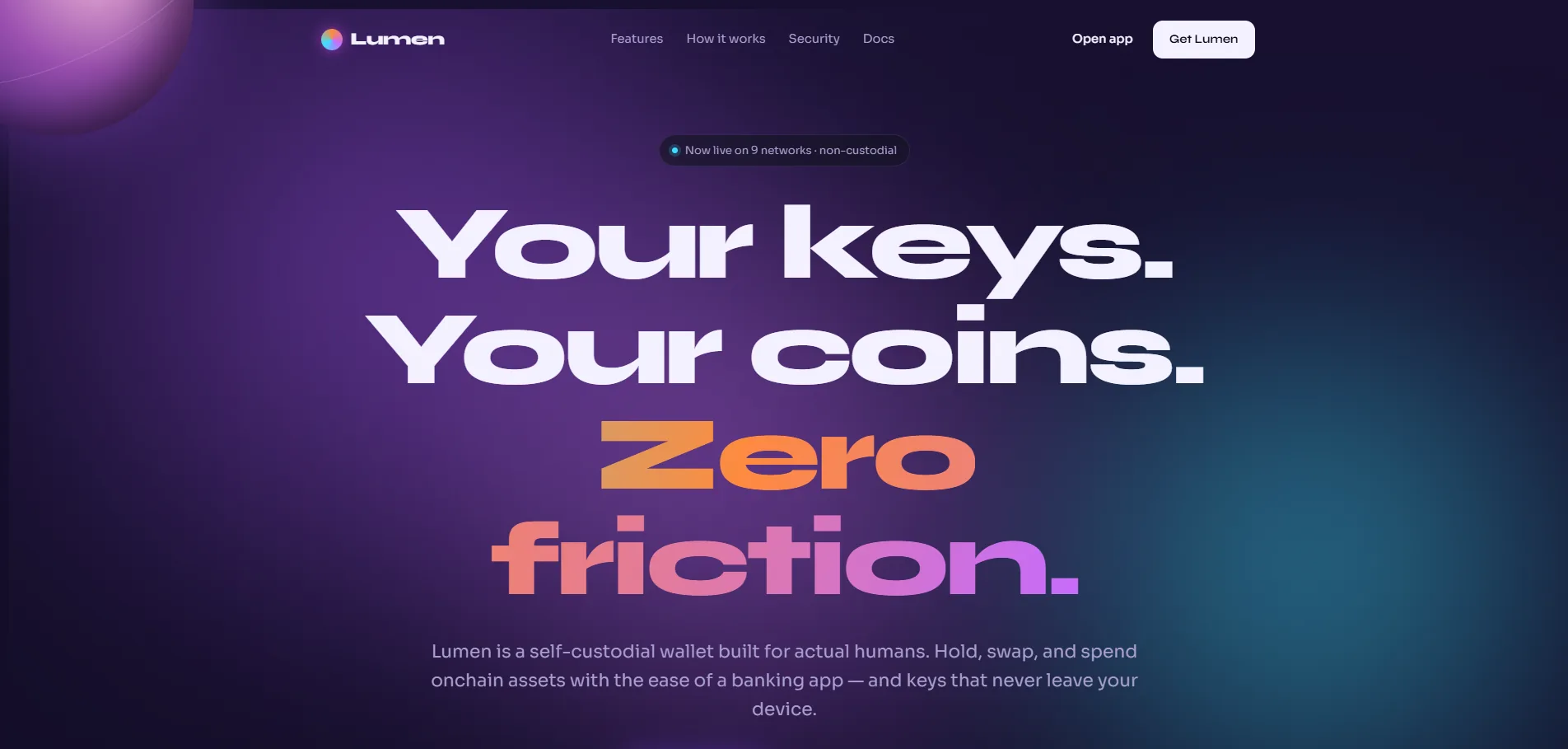
Option B, Iridescent Mesh Gradient (Chosen). Abstract iridescent mesh communicates the multi-chain financial internet without literal crypto imagery. Technically credible to natives, abstractly expressive to newcomers.
Why Option B. The target user is not the DeFi native. Lumen's job is to make self-custody feel attainable to people who have heard of crypto but never touched a wallet. The visual language had to match that user, not the existing market.
Reasoning: Visual language signals who the product is for before a word is read. Crypto iconography closes the door on mainstream adoption at the first impression.
Decision 02
Upfront seed phrase warning vs. Progressive security disclosure
Problem. Self-custody requires users to understand seed phrase responsibility before they can use the wallet. The standard approach. Full warning at first screen, causes the exact user Lumen is for to abandon setup.
Option A, Upfront Full Warning. "If you lose this phrase, no one can recover your funds" as the first substantive screen. Accurate, necessary, and the single largest drop-off point in every self-custody wallet that does this.
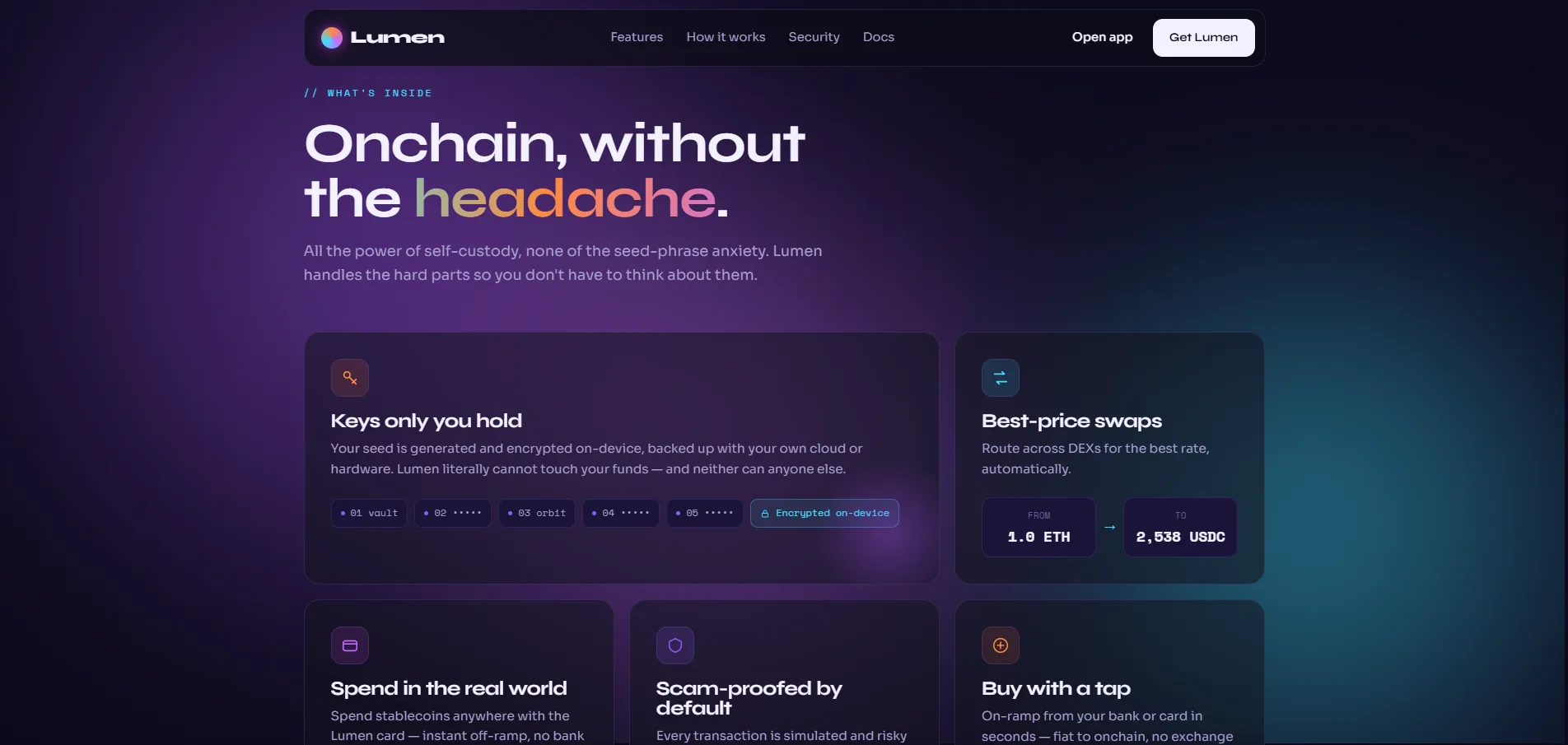
Option B, Progressive Disclosure (Chosen). Security responsibility introduced gradually: wallet creation first, small amount first, seed phrase education framed as a graduation. Each step building confidence before the next requirement is introduced.
Why Option B. The 35-year-old finance professional who put the phone down at the seed phrase screen is the user we are designing for. The message cannot be softened, but the sequence can be designed so it feels manageable.
Reasoning: The seed phrase screen is not a UX problem, it's a sequencing problem. The information is correct; the moment it appears determines whether the user is ready to receive it.
Decision 03
Security as footnote vs. Trust architecture as product section
Problem. Crypto wallets have a trust deficit with mainstream users. Hacks, rug pulls, and exchange collapses dominate the news. Security claims in footer text are discounted before they are read.
Option A, Footer Security Note. "Open source and audited" in small text at the bottom. Technically accurate, visually insignificant, treated by users as boilerplate rather than substance.
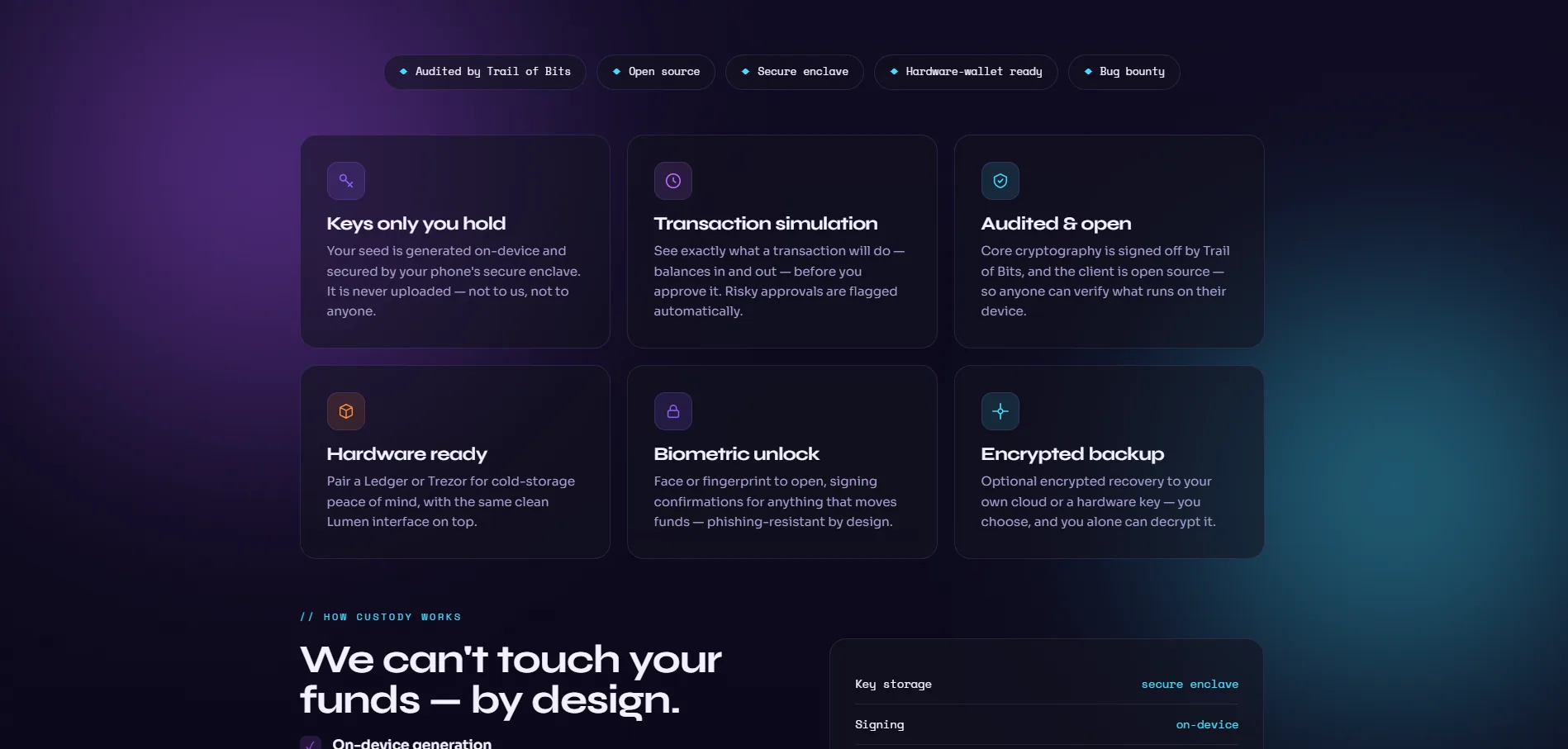
Option B, Trust Architecture Section (Chosen). Open source, third-party audits, and non-custodial architecture given a dedicated section with the same visual weight as core product features. Communicating that trust is architecture, not afterthought.
Why Option B. For a mainstream user considering self-custody for the first time, security is not a reassurance, it's a prerequisite. The trust section needed feature-level prominence to be processed as substance rather than decoration.
Reasoning: In a category with a trust deficit, security claims buried in the design are ignored. Visual prominence is not emphasis, it's credibility.